Paper - Photometric Stereo based PBR Material
A scan of standard, white, printer paper sheet. Nothing special, but its something almost impossible to scan with photogrammetry due to lack of features useful for camera alignment in space but also very tiny, barely noticeable micro detail level.
Basically paper is made of cellulose fibres (woodpulp), which are made of tree and diluted in water. Paper also can be made from other materials such as cotton, flax, esparto, straw, hemp, manilla and even jute.
Anyway, paper is very tricky. It appears white as reflects most of the light it receives. In 0-255 PBR range its albedo is usually somewhere around RGB 251.
For those interested in technique used, it is available on my youtube channel in this video:
https://youtu.be/7YGd3bcO_Ys
Material was captured with the flash light used as a source of light. Initial texture set was generated from 25 images with Details Capture and tiled with Unity ArtEngine. Images used for reconstruction were initially preprocessed with the PhotoLab5. I included some macro shots as they help to understand light response from the surface and because I captured them for my incoming video about color calibration and would be a waste not to share :D
If you want to see more macro images like these, please follow me on my instagram: gbaran76
Cheers
G.


PBR preview: Albedo / Normal / Height / Roughness / Ambient Occlusion

Capture - as a source of light I used AD200Pro flash in TTL mode
A video on my channel where I present capture process https://youtu.be/7YGd3bcO_Ys

Source material - paper sheet with 4cm long ruler used as a scale reference to define capture area

Source material - 10cm field of view

Source material - 5mm field of view

Source material - 5mm field of view treated with ultraviolet 365nm wave length light. As you can see paper simply reflects most of the UV light and has no any atoms which respond with light emission.

Source material - 1mm field of view

Details Capture - photometric stereo reconstruction based on 25 images. Unity ArtEngine is also an option to consider but it is limited just to 16 input images while Details Capture has no such limit (afaik its max 256 if there is enough RAM).
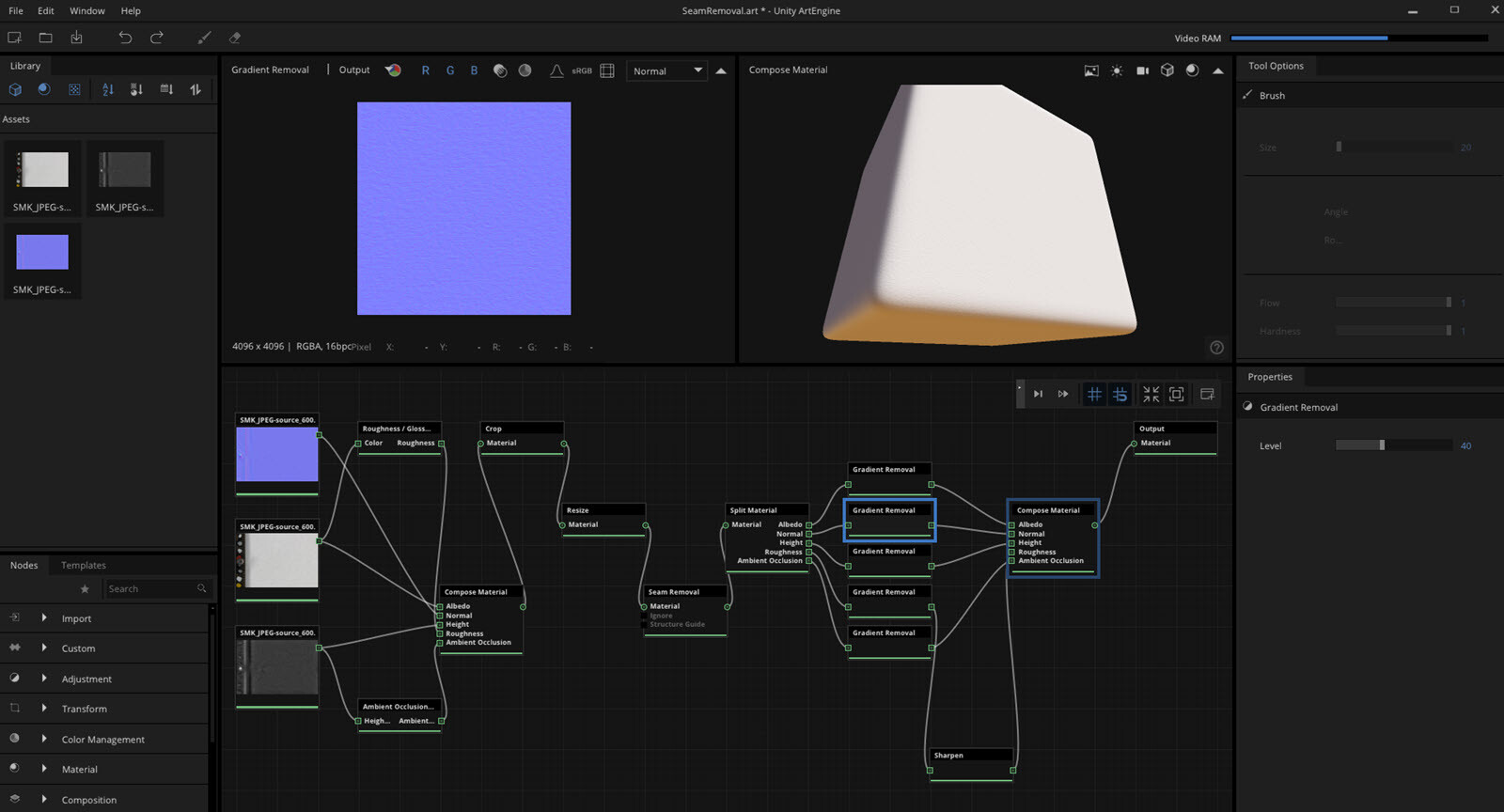
Unity ArtEngine - probably the best tool available to automaticaly remove seams from most of scan based materials. I also used it to generate roughness and ambient occlusion maps